
Typical Pitfalls to Steer Clear of with Live Dealer Games

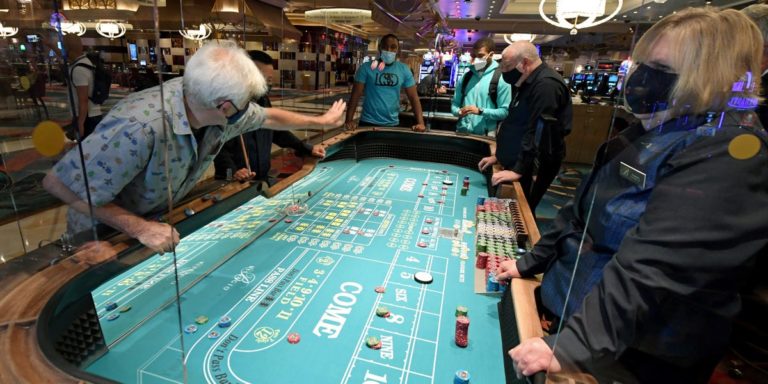
Live dealer games close the gap between brick-and-mortar casinos and online play, streaming professional croupiers directly to your screen in real time https://leonvegascasino.ca/. At LeonVegas Casino, we have seen thousands of Canadian players experience the thrill of blackjack, roulette, baccarat, and game-show titles presented from sophisticated studio environments. The social interaction, the tangible pace of real cards being dealt, and the transparency of watching every wheel spin produce an authenticity that random number generator games simply cannot replicate. Yet that same authenticity brings pitfalls that newcomers routinely face. Misunderstanding game speed, overlooking table limits, running after losses under the glare of a live camera, and overlooking the technical requirements of stable streaming can eat away at both your bankroll and your enjoyment. This article unpacks the most frequent mistakes we observe and offers concrete strategies to avoid them, making sure your live dealer sessions remain engaging, controlled, and grounded in smart decision-making.
Mixing up Live Dealer Speed for RNG Speed
The Gap in Hands Per Hour
One of the biggest adjustments players face when migrating from standard online table games to the live dealer environment is the dramatic difference in hands per hour. A digital blackjack game can handle upwards of 200 hands in sixty minutes if you play rapidly, whereas a live blackjack table with a human dealer handling physical cards, chatting with players, and waiting for betting timers typically provides between 40 and 70 hands in the same window. Players who overlook this slower cadence often become restless and begin putting side bets they would normally avoid, purely to bring more action into the session. That impatience directly feeds the house edge, because side bets like Perfect Pairs or 21+3 carry significantly higher built-in advantages than the main blackjack hand. We notice this pattern happen across roulette and baccarat tables as well, where the deliberate pace of a real croupier collecting chips and spinning a physical wheel cannot be accelerated.
Using the Slower Pace to Your Advantage
The slower tempo also produces an illusion of control that can have the opposite effect. With more idle seconds between decisions, some players analyze too much their strategy, second-guess basic strategy charts, or start experimenting progressive betting systems that require raising wager sizes after losses. In a fast RNG game, the rapid-fire nature tends to maintain players anchored to a predetermined plan. In a live setting, the breathing room encourages tinkering. We suggest embracing the relaxed pace as a feature rather than a flaw. Use the extra time to watch the dealer’s rhythm, monitor your session duration realistically, and adhere to the same optimal decisions you would apply in any blackjack or baccarat game. View the gaps as a natural bankroll protection mechanism, not a void that needs filling with impulsive wagers. The deliberate cadence also allows you log results manually if you like tracking performance, converting idle seconds into a productive review habit.
Failing to Manage Session Duration and Fatigue
Identifying Cognitive Decline During Play
Live dealer games are immersive by design. The combination of HD video, professional dealers, ambient studio sound, and interactive chat creates an absorbing environment that makes time slip away unheeded. Unlike RNG games where you might check at a clock between auto-spins, a live session demands sustained attention, and that prolonged focus can lead to mental fatigue that impairs decision quality after 60 to 90 minutes. Fatigued players make basic errors: misinterpreting a blackjack hand total, missing whether the dealer stands on soft 17, or inadvertently placing a bet on the wrong roulette number. These mistakes are not strategic miscalculations; they are cognitive lapses caused by exhaustion. We have watched sharp players deteriorate into sloppy decision-makers simply because they failed to stand up and take a break.
Organizing Breaks and Setting Hard Stop Times
We advise setting a firm time limit before launching any live dealer session, using a phone alarm or a desktop timer that will disrupt the immersive bubble. A 45- to 60-minute block is a reasonable window for most players, after which a 15-minute break away from the screen can reset your focus. During that break, stand up, hydrate, and determine whether you are still playing for enjoyment or simply because the stream is still running. Fatigue also undermines loss-limit discipline, because a tired brain leans toward shortcuts—like doubling a bet to recover quickly—rather than reasoned analysis. Treat session duration as diligently as you treat bet sizing. The most expensive mistakes in live dealer play often occur not in the first half-hour but in the second or third, when the player’s sharpness has quietly drained away and every decision becomes a little less precise.
Ignoring Table Limits and Bankroll Compatibility
Stepping into a live dealer lobby without checking minimum and maximum bet thresholds is the same of sitting down at a physical casino table without looking at the placard. At LeonVegas Casino, our live dealer section offers a broad spectrum of limits, from low-stakes tables suitable for casual players to VIP environments where minimum hands can go up to hundreds of dollars. A player holding a $100 bankroll who inadvertently joins a $25 minimum blackjack table has set themselves up for only four losing hands before being wiped out, leaving zero room for the natural variance that even perfect basic strategy cannot erase. That compressed timeline practically guarantees a short, frustrating session no matter skill level. We have observed this exact scenario happen countless times, and the disappointment on a player’s face is visible even through a chat box.
Bankroll compatibility extends beyond the minimum bet. We advise players to follow the standard rule of having at least 30 to 50 times their average wager ready for a session. If you plan to bet $10 per hand, a $300 to $500 bankroll provides you with the statistical breathing room to ride out downswings. view the guide The live dealer environment amplifies the importance of this math because the slower pace means a losing streak seeming more drawn out and emotionally taxing. Before clicking into any table, look at the limit display clearly presented in the lobby. If your bankroll does not comfortably cover 40 rounds at your intended bet size, drop down to a lower-limit table or opt for a game with a slower loss rate, such as single-zero roulette instead of multi-hand blackjack. Disciplined table selection is the least exciting but most effective edge a player can obtain before a single card is dealt.
Confusing Standard Offers with Live Casino Bonuses
Promotional terms at online casinos frequently vary between slots, RNG table games, and live dealer titles, and failing to read the fine print is among the most frequent account-level mistakes we see. Many welcome bonuses and reload offers apply at vastly different rates depending on the game category. A deposit match could clear at 100% wagering contribution on slots but only 10% or even 5% on live dealer games. A player who takes a bonus, heads straight for live blackjack, and expects to meet the playthrough requirement efficiently may discover after hours of play that they have barely made a dent in the wagering obligation. Worse, some promotions omit live dealer play entirely, so wagers placed at those tables contribute zero percent toward unlocking bonus funds.
At LeonVegas Casino, the promotions page clearly outlines game weightings and eligibility, and we encourage every player to review that section before triggering any offer. Search for live-dealer-specific promotions, which are available and are designed with realistic wagering contributions in mind. These might include cashback on live losses, leaderboard tournaments connected to specific game-show titles, or reload bonuses that clearly mention live tables as qualifying. Beyond wagering contributions, check for maximum bet restrictions during bonus play—putting a $50 hand while clearing a bonus that caps bets at $10 can invalidate the promotion and any associated winnings. Consider the terms and conditions as a part of your pre-game checklist, right alongside bankroll management and table limit scanning. A bonus should boost your session, not turn into a trap that voids your winnings.
Chasing Losses Under the Public Spotlight
Live dealer games introduce a social dimension absent from solo RNG play. A chat function connects you to the dealer and sometimes to other players, and the dealer may note wins, losses, and player decisions with verbal comments. This communal atmosphere, while engaging, creates a psychological pressure that speeds up loss-chasing behaviour. After a string of losses, a player might feel embarrassed or driven to prove their competence to the dealer and the unseen audience, leading to larger bets, riskier side wagers, or forsaking basic strategy to “get even” dramatically. The involvement of a human dealer who expresses sympathy during a losing streak can ironically deepen the urge to recover losses quickly, because the player believes the dealer is rooting for them. We have noted this dynamic push rational players into deeply irrational betting patterns within minutes.
The live chat box can also become an echo chamber of poor advice. Other players may celebrate reckless gambles that paid off, normalizing behaviour that is statistically ruinous over time. We advise treating the social features as entertainment, not as a strategic council. If you notice your bet sizing creeping upward after a losing streak, or if you experience a twinge of reluctance to log off because the dealer just joined the table and you do not want to “disappoint” them, identify that as a red flag. Set a loss limit before the session begins—either a dollar amount or a number of consecutive lost hands—and treat it as non-negotiable. Logging off promptly when you reach that boundary is a sign of discipline, not weakness, and the dealer will not think less of you for managing your bankroll responsibly.
Overlooking the Game’s Betting Timers
Every live dealer table functions on a tight betting and decision window, generally spanning from 10 to 30 seconds relying on the game and the table’s configuration. New players often misjudge how rapidly that countdown runs out, notably when they are concurrently handling their chip stack, checking a strategy reference, or writing in the chat. Missing the betting window in roulette means your chips never arrive on the layout for that spin. In blackjack, not managing to make a decision before the timer expires often ends in an automatic stand—which can be devastating if you are playing a hand that badly needs a hit against a dealer’s strong upcard. We have witnessed players stare at a 15 against a dealer’s 10, stuck with indecision, only to watch the timer end and the hand resolve without their input.
The timer is not a recommendation; it is a hard deadline applied by the software. We have seen players forfeit hands they could have won simply because they were preoccupied by a second screen or paused too long over a marginal choice. To circumvent this, get used to yourself with the particular timer length of your chosen table during a few low-stakes observation rounds. Monitor how fast the dealer moves from calling “no more bets” to displaying the result. If you intend to use a basic strategy card, have it on paper printed or open on a separate device so you are not toggling between windows. In games like Lightning Roulette or Crazy Time, where additional multiplier animations eat into the betting window, the effective decision time can appear even shorter. Predict the rhythm, set your bets early in the window, and reserve the final seconds for a quick review rather than frantic last-second clicking.
Misinterpreting the Live Dealer Game Types
Not all live blackjack, roulette, or baccarat tables follow identical rules, and assuming uniformity across the lobby is a costly oversight. A live blackjack table could pay 3:2 on a natural while another, often labeled differently, pays 6:5. That seemingly small rule change boosts the house edge by roughly 1.4%, turning a player-friendly game into a significantly tougher proposition. In roulette, the presence of a single zero versus a double zero is the gap between a 2.70% house edge and a 5.26% one. Live dealer lobbies usually offer both European and American wheels, and the visual difference is easy to miss if you are clicking through thumbnails quickly. We have seen players sit at American roulette tables for an hour without realizing the extra zero was steadily doubling the casino’s mathematical advantage over them.
Baccarat tables can differ in commission structures on Banker wins, with some taking the standard 5% and others providing no-commission variants that push on a winning Banker total of six. Game-show titles like Dream Catcher, Crazy Time, or Monopoly Live each feature unique bonus rounds, multiplier mechanics, and betting grids that benefit players who review the paytable before wagering. We advise opening the game rules or info panel—usually a small icon within the interface—and checking the key parameters before placing a single chip. Confirm the blackjack payout, the number of decks in play, whether the dealer stands or hits on soft 17, and any side bet rules. Five minutes of reading can avoid hours of playing at a mathematical disadvantage you never meant to accept.
Neglecting Stream Stability and Device Setup
Network and Access Requirements
Live dealer games consume significantly more bandwidth and processing power than their RNG counterparts. A high-definition video stream running continuously, often with multiple camera angles, requires a stable internet connection of at least 2 to 5 Mbps for smooth playback. Players trying to play over patchy mobile data, congested public Wi-Fi, or while downloading large files in the background frequently experience frozen frames, audio desync, and outright disconnections. A dropped connection during an active bet is not merely an annoyance; depending on the game and the point at which the stream cuts out, your wager may stand and resolve without your input, or you may miss the window to make a critical decision like hitting or standing in blackjack. We have seen players lose substantial hands because their stream froze precisely as the dealer revealed a winning card, leaving them unable to react.
Optimising Your Device Before a Session
We consistently see players worsen this mistake by failing to adjust their device settings before a session. Notifications popping up mid-hand, battery-saving modes dimming the screen, or background apps consuming RAM can all degrade performance. On mobile, a dedicated casino app typically offers a more optimised stream than a browser, though both are viable if your connection is robust. Before joining a live table, close unnecessary tabs and applications, switch off non-essential notifications, and if possible, connect via a private Wi-Fi network rather than cellular data. Testing your setup with a low-stakes round or two is a prudent habit. The goal is to remove technology as a variable so your focus remains entirely on the dealer, the cards, and your strategy. for the full story A stable stream also retains the immersive quality that makes live dealer play compelling in the first place.
Playing Complex Side Bets Without Understanding the Math
Live dealer games regularly display an selection of optional side bets that inject diversity and the appeal of large payouts into standard table action. In blackjack, you will come across Perfect Pairs, 21+3, and Bet Behind. In baccarat, side wagers on Dragon Bonus or Panda 8 emerge alongside the main Banker and Player bets. Roulette tables may feature racetrack betting for neighbour and sector calls. Game-show titles are built largely around bonus rounds and multiplier segments. The common thread is that most side bets carry a house edge considerably higher than the main game—often between 4% and 10%, and occasionally soaring past 15% in the case of certain baccarat props. We have observed players be drawn to these wagers because the payout numbers look exciting, without ever computing the true cost.
The danger resides not in placing a side bet occasionally for entertainment but in steadily increasing their frequency until they control your wagering. A player who begins by tossing a dollar on Perfect Pairs every few hands may, after a couple of near-misses, start betting larger amounts or adding multiple side bets simultaneously, convinced that a hit is “due.” The mathematics do not function that way; each side bet is an independent wager with its own fixed house edge that erodes at your bankroll no matter of what happens in the main hand. We recommend treating side bets as a small, separate entertainment budget—perhaps 5% of your total session bankroll—and never letting them to move into the territory where they substantially accelerate your expected loss rate. If you cannot explain exactly what conditions prompt a payout and what the house edge is, you should not be making the bet.
Gambling Without a Defined Strategy or Strategy Reference
Stepping into a real-time dealer session without a clear plan is the main misstep that intensifies every additional mistake on this catalog. For blackjack, that involves understanding basic strategy perfectly—the most advantageous decision for every conceivable player hand against every potential dealer upcard. Basic strategy tables are easily accessible, casino-legal, and reduce the house edge to significantly less than 1% when used with beneficial table rules. For baccarat, the ideal tactic is simple: bet on Banker consistently and steer clear of the Tie bet, which possesses a house edge surpassing 14%. For roulette, sticking to even-money outside bets on a European single-zero wheel minimises the house edge, while inside bets on individual numbers should be viewed as volatile lottery tickets instead of a long-term method. We have watched players who carry a printed strategy card to their sessions regularly beat those who depend on gut feeling alone.
Setting a plan also involves determining in beforehand what your session goals are. Are you participating for 45 minutes of entertainment with a $200 bankroll, acknowledging that you could lose it all but striving to extend the time? Or are you pursuing a specific win goal—say, 30% gain on your session bankroll—after which you will log off no matter how “hot” the table seems? Absent these guardrails, live dealer play slides into impulsive gambling, where each bet value and choice is shaped by the psychological impact of the prior result. We see disciplined players often surpass reckless ones not because they are luckier but because they take away judgment from moments where choice contributes to bad moves. Keep a strategy reference available, establish your entry and exit conditions, and view the live dealer lobby as a place to implement a plan rather than devise one on the fly.
Underestimating the Value of Observation Ahead of Gaming
Most live dealer sites, including the section at LeonVegas Casino, allow you to observe a table in action without making a bet. This watching mode is an overlooked tool that can hone your preparedness and stop costly mistakes. By observing a few rounds before entering, you can check the dealer’s tempo, confirm the betting timer time, note how the interface manages chip setting, and check whether the stream quality stays consistent on your network. You can also notice rule variations—such as whether the dealer hits to 16 or holds on all 17s—that might not be directly obvious from the table name alone. We have seen players skip this step and enter tables with rules they would never have picked had they taken five minutes watching first.
Observation also plays a psychological purpose. Diving straight into a live table without preparation can trigger a subtle anxiety that hurries your first few choices. Viewing five or ten hands develop lets you adapt to the studio environment, the dealer’s voice and pace, and the rhythm of the betting phase. In game-show games like Crazy Time or Monopoly Live, observation indicates how regularly bonus rounds activate and how the multiplier segments perform, giving you a true feel of the game’s volatility before your money is at play. We advise making watching a normal pre-play habit, especially when playing a new variant or returning after a long absence. The minutes you invest watching are an contribution in the level of the hours you invest gaming. Here are the key advantages of scouting before you buy in:
- Confirm the dealer’s tempo and betting timer length so you are not surprised by a quicker or more leisurely tempo than expected.
- Check stream reliability on your current link, preventing the frustration of finding lag or buffering mid-hand.
- Identify rule variations such as blackjack payouts, quantity of decks, and dealer soft-17 play before dedicating funds.
- Adjust to the studio setting, dealer communication manner, and interface arrangement so your first real bet seems comfortable rather than hurried.
- Assess the variance of game-show titles by watching how regularly bonus rounds and multiplier sections really activate during normal action.